
Healthcare today is more connected—and more complex—than ever before. From hospitals and clinics to diagnostic labs and remote care teams, providers must coordinate across multiple departments, locations, and technologies. This is where collaboration platforms in healthcare play a critical role.
Healthcare collaboration platforms are digital tools designed to streamline communication, share patient information securely, and align care teams around a single source of truth. In the post-COVID era, with accelerated digital transformation, remote consultations, and rising patient expectations, these platforms are no longer optional—they are foundational to modern care delivery.
What Are Collaboration Platforms in Healthcare?
Healthcare collaboration platforms are secure digital systems that enable care teams to communicate, coordinate, and manage clinical workflows in real time. Unlike basic messaging tools, these platforms are purpose-built for healthcare environments, prioritizing data security, interoperability, and patient safety.
Definition & Core Features
At their core, healthcare collaboration platforms bring together multiple communication and coordination functions into one unified interface. Common features include:
- Secure messaging between clinicians, nurses, and support staff
- Shared patient records or contextual data access
- Task assignment and tracking for care coordination
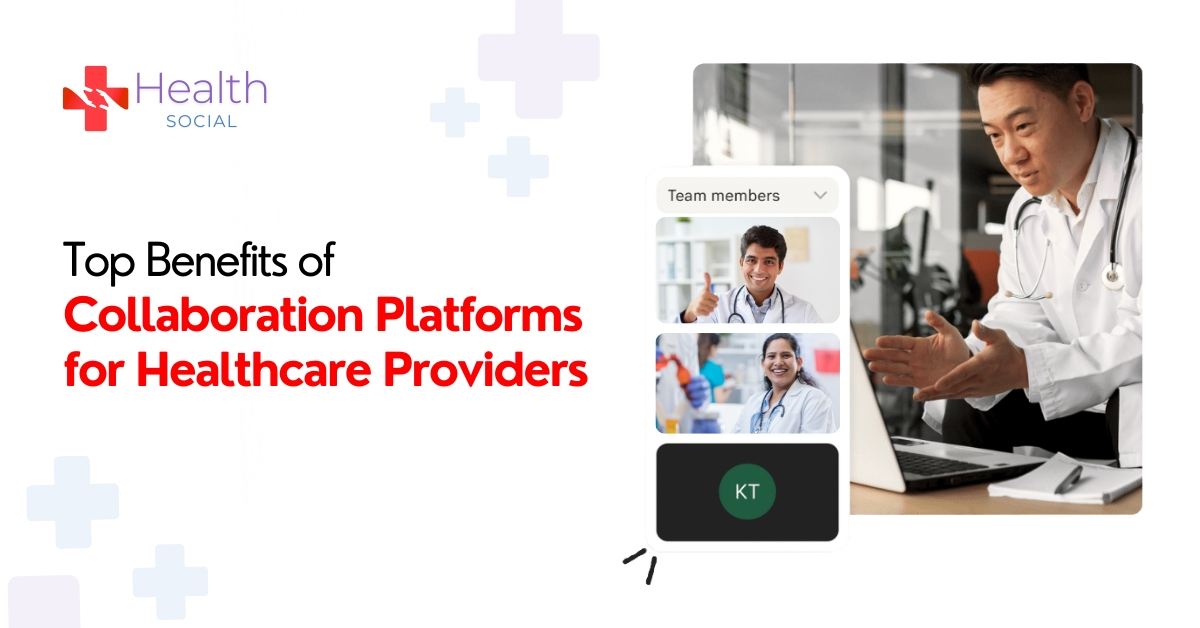
- Video conferencing for virtual consultations and case discussions
- Mobile access to support on-the-go clinical workflows
Types of Platforms Used in Healthcare
Healthcare organizations use different types of collaboration platforms depending on their needs:
- Cloud-based platforms offering scalability and remote access
- On-premise solutions preferred by institutions with strict data control requirements
- EHR-integrated communication tools embedded directly into clinical systems
- Specialized team-based apps, such as nurse collaboration or care coordination tools
Why Collaboration Matters in Healthcare
Traditional healthcare communication methods—pagers, phone calls, fragmented emails—were never designed for today’s fast-paced, team-based care models. As patient cases grow more complex, poor communication becomes a serious risk to patient safety.
Studies across healthcare systems have consistently shown that miscommunication is a leading contributor to medical errors, care delays, and increased operational costs. When information is scattered across systems or delayed between teams, providers may duplicate tests, miss critical updates, or struggle with ineffective handoffs.
Top Benefits of Collaboration Platforms
Enhanced Care Coordination
One of the most significant benefits of healthcare collaboration platforms is improved care coordination. When teams operate within a unified communication environment, information flows seamlessly across departments and shifts.
Instead of relying on fragmented updates, clinicians can view shared patient contexts, care plans, and task statuses in real time. This reduces duplication of work, minimizes handoff errors, and ensures continuity of care.
Faster, Secure Communication
Speed matters in healthcare—but so does security. Collaboration platforms enable instant, secure communication, replacing outdated pagers and unsecured messaging apps.
Modern healthcare communication tools are built with encryption, access controls, and audit logs to meet regulatory requirements such as HIPAA. Messages, files, and video calls are protected while remaining easily accessible to authorized users.
Improved Clinical Decision-Making
Clinical decisions are strongest when informed by timely data and collaborative expertise. Healthcare collaboration platforms support real-time clinical decision-making by enabling multiple providers to review information and contribute insights simultaneously.
For instance, a complex case may require input from physicians, radiologists, and pharmacists. Instead of sequential phone calls or delayed emails, a collaboration tool allows all stakeholders to discuss findings, review results, and agree on treatment plans quickly.
Reduced Administrative Burden
Administrative overload is a major contributor to clinician burnout. Collaboration platforms help reduce administrative burden by automating workflows and centralizing task management.
Features such as task assignment, status tracking, and automated notifications reduce the need for repetitive documentation and manual follow-ups. Shift handoffs become smoother when incoming staff can instantly review pending tasks and patient updates.
How to Choose the Right Collaboration Platform
Selecting the right healthcare collaboration platform requires careful evaluation beyond basic features.
Must-Have Features
Healthcare organizations should prioritize platforms that offer:
- Strong security and compliance (HIPAA, ISO standards)
- EHR integration for seamless workflows
- Mobile accessibility for frontline staff
- Real-time updates and alerts
Future Trends in Healthcare Collaboration
The future of healthcare collaboration is increasingly intelligent and interconnected. Emerging trends include:
- AI-driven workflows that prioritize messages and suggest actions
- Predictive analytics supporting proactive care coordination
- Enhanced telemedicine ecosystems integrating collaboration tools
- Greater interoperability through standards like FHIR and open APIs
Conclusion
Healthcare collaboration platforms are transforming how care teams communicate, coordinate, and deliver outcomes. From enhanced care coordination and faster communication to reduced administrative burden and improved patient engagement, the benefits are both operational and clinical.
In an era defined by digital transformation and distributed care, these platforms are no longer optional—they are essential infrastructure for modern healthcare providers.