
The healthcare industry is undergoing a profound transformation as digital engagement becomes central to communication between pharmaceutical companies and medical professionals. For decades, pharma–doctor interactions depended heavily on in-person visits, conferences, and printed promotional materials. While effective in many cases, these traditional methods came with clear challenges—logistical limitations, tight physician schedules, travel dependencies, and rising regulatory scrutiny over the nature and frequency of promotional interactions.
The COVID-19 pandemic accelerated a long-awaited shift. With restrictions on physical meetings, both pharma teams and healthcare professionals quickly adopted virtual meetings, teleconferencing tools, and online medical education as the new standard. These platforms not only bridged the communication gap during a crisis but also revealed long-term advantages: improved accessibility, structured content delivery, compliance-focused workflows, and scalable engagement opportunities.
Key Features of Digital Meeting Platforms Benefiting Pharma–Doctor Engagement
A. Real-time communication
Modern digital platforms enable pharma teams to conduct live presentations enriched with Q&A sessions, polls, reaction tools, and interactive chat. High-quality data visualization enhances clinical discussions, allowing doctors to interpret scientific results more clearly than in traditional face-to-face conversations.
B. On-demand access to scientific content
Doctors value flexibility. Recorded webinars, downloadable clinical data, infographics, and case studies let physicians revisit information whenever needed. Asynchronous learning significantly improves retention and ensures physicians never miss important updates.
C. Multi-device compatibility
Whether on mobile, desktop, or tablet, physicians can access resources anytime, anywhere. This removes travel barriers and allows quick, convenient engagement—even between patient consultations.
D. Integrated compliance and security
Compliance continues to be a top priority in pharma–doctor communication. Digital platforms enforce regulatory requirements by separating promotional from scientific content, offering secure logins, encrypted interactions, and audit trails to track meeting activities. This reduces compliance risks and boosts trust.
E. AI-enabled personalization
AI helps create tailor-made experiences by analyzing physician behavior, specialties, and interaction history. The system recommends therapy-area updates, clinical papers, and meeting content relevant to each doctor. Predictive insights help pharma teams engage more meaningfully.
F. Collaborative tools
Interactive whiteboards, annotations, shared screens, and real-time document editing make clinical discussions more thorough. Collaborative features enable physicians to better visualize mechanisms of action, patient pathways, and treatment outcomes.
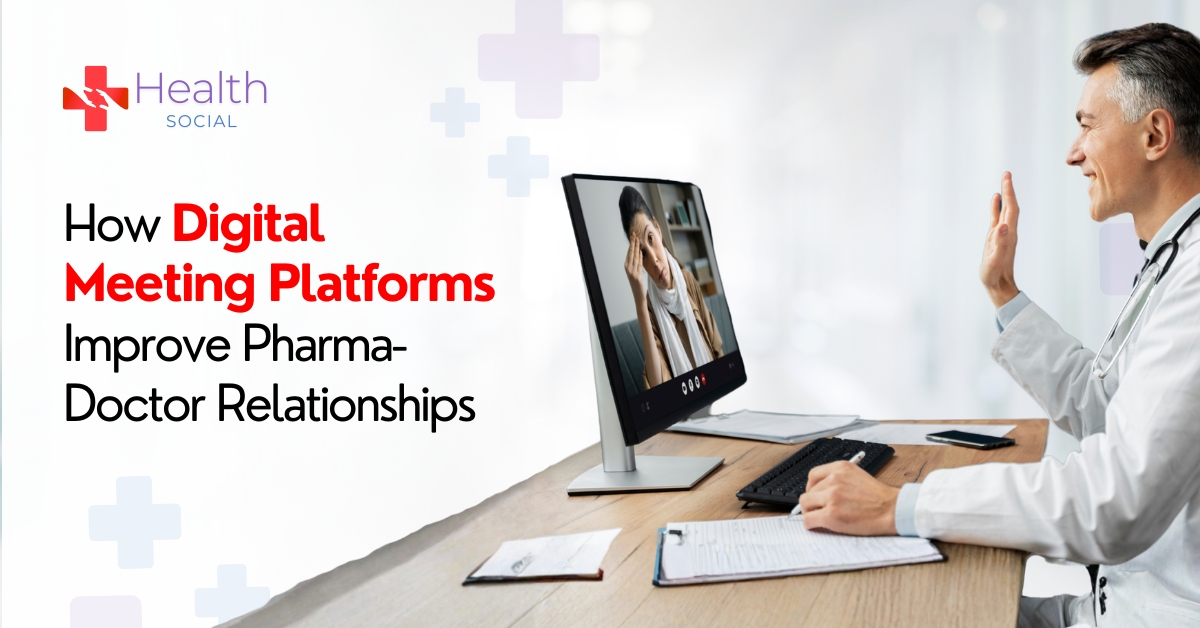
How Digital Meeting Platforms Improve Pharma–Doctor Relationships
A. Enhancing trust through transparency
Digital meeting platforms maintain complete documentation of all interactions, including content shared and engagement statistics. Compliance features reduce the risk of undue influence, creating transparent and ethical communication channels.
B. Enabling consistent, high-quality engagement
With virtual meetings in pharma, physicians can attend short, focused sessions without disrupting their schedules. This removes the unpredictability of physical visits, leading to sustained, meaningful engagement rather than sporadic interactions.
C. Reducing barriers to medical information
Physicians often need rapid access to updated clinical guidelines, drug mechanisms, trial results, and post-market studies. Digital platforms ensure this information is available instantly, improving the quality and speed of scientific exchange.
D. Supporting evidence-based discussions
Interactive tools enable pharma teams to present real-time data, mechanism-of-action models, case simulations, and comparative studies. These features support evidence-based decision-making, ultimately improving prescribing behavior and treatment outcomes.
E. Personalizing the physician experience
Meeting agendas can be customized based on the physician’s specialty, interests, and patient population. AI-driven insights help identify what matters most to each doctor, making every interaction more valuable.
F. Building long-term relationships
Regular touchpoints—such as short briefings, follow-up emails, or quick updates—ensure consistent communication. Over time, this builds familiarity, trust, and mutual respect.
Technologies Powering Modern Pharma Virtual Meetings
A. Artificial Intelligence
AI enables predictive content recommendations, automated summaries, and chatbot-driven FAQs. These features reduce manual effort and enhance value-based interactions.
B. Data Analytics
Attendance trends, engagement time, click patterns, and topic popularity help pharma teams tailor future sessions and understand physician behavior at a granular level.
C. Virtual Reality (VR) and Augmented Reality (AR)
Immersive demonstrations of drug mechanisms, 3D anatomy models, and simulated patient cases allow deeper understanding and more engaging medical education.
D. Cloud-based platforms
Cloud technologies support real-time collaboration across countries, seamless updates, and uninterrupted scalability for large events.
Challenges and Limitations of Virtual Meetings in Pharma
- Digital fatigue: Too many online sessions can reduce attention.
- Connectivity issues: Not all regions have stable internet.
- Reduced personal rapport: Emotional connection may be weaker without face-to-face interaction.
- Compliance risks: Misuse of unapproved content or data lapses must be carefully managed.
- Technology barriers: Some doctors require training to use advanced platforms effectively.
The Future of Pharma–Doctor Engagement Through Digital Platforms
The future points toward a hybrid model combining physical visits with virtual interactions. AI will play a stronger role in hyper-personalized scientific exchange, while digital twins, AR demos, and medical simulations will transform medical education. Virtual communities will expand cross-border collaboration among physicians and KOLs, creating continuous learning ecosystems. Ultimately, virtual meetings in pharma will evolve into central hubs for transparent, efficient, and impactful engagement.
Conclusion
Digital meeting platforms have matured from emergency solutions to essential communication tools in the pharma–doctor ecosystem. They simplify scientific exchange, break geographical barriers, and deliver relevant medical information efficiently. As virtual meetings in pharma continue to evolve, physician engagement becomes more ethical, informed, and collaborative. These advancements ultimately translate into better clinical decisions, improved patient outcomes, and stronger long-term relationships between pharmaceutical companies and healthcare professionals.