
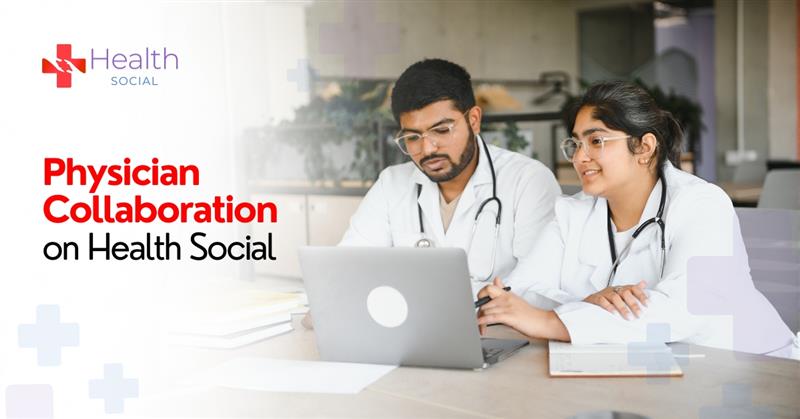
Collaboration among clinicians is consistently linked with better patient outcomes and safer care. Overviews and systematic reviews of interprofessional collaboration report improvements in areas like blood pressure, HbA1c, length of stay, and overall quality of care when teams coordinate effectively.
Inside the Health Social community, physicians can translate that evidence into everyday practice—building faster consult loops, clearer handoffs, and stronger specialty networks.
What great collaboration looks like
1) Real-time, secure communication
Secure, HIPAA-compliant messaging reduces paging delays and makes consults faster; implemented well, it improves information flow (though it must be managed to avoid extra workload).
2) Shared learning and CME
When thoughtfully designed, CME/CPD activities increase knowledge, change clinician behavior, and can improve patient outcomes. A platform that curates (and credits) high-quality CME meets physicians where they are—on mobile and in short, practical formats.
3) Evidence at the point of care
Clinical decision support (CDS) embedded in workflows helps physicians act on the latest guidelines with patient-specific insights—improving care quality and reducing cognitive burden.
4) Communities of practice
Specialty groups that swap cases, pathways, and pearls speed up the spread of evidence-based practice and make change stick.
Why the Health Social community accelerates collaboration
Secure by design
Provider-to-provider communication that touches PHI must use secure channels. Guidance from HHS clarifies how HIPAA permits remote communication technologies; purpose-built secure messaging avoids the pitfalls of plain SMS and email.
Signal over noise
Done right, secure messaging improves connectivity and care collaboration; the key is governance—clear triage rules, channel norms, and escalation paths—to avoid alert fatigue.
Learning that moves the needle
CME that is interactive, case-based, and linked to practice gaps is associated with better retention and behavior change—exactly the kind of programming physicians engage with in online communities.
Decision support where it counts
Curated pathways, order sets, and CDS summaries—linked right from discussion threads—shorten the distance between evidence and action.
Conclusion
Physician collaboration thrives when conversations, education, and evidence live in one place. The Health Social makes it easy to run secure consults, deliver outcome-focused CME, and plug evidence right into daily workflows. With the right governance—and a focus on measurable wins—you’ll see the practical benefits that the literature has been signaling for years.